
TL;DR
- In Singapore, ptosis surgery (otherwise known as droopy eyelid surgery) helps correct drooping eyelids that may interfere with vision or cause eye strain.
- Treatment options range from surgery to non-surgical aids like prescription eye drops.
Do your eyelids feel heavy, or do you find yourself tilting your head back just to see clearly? Droopy eyelids are more than a cosmetic concern — they can strain your eyes, limit your field of vision, and affect your daily confidence. Many people live with these frustrations for years before realising that treatment is available.
For patients seeking a lasting solution, ptosis surgery in Singapore offers a way to restore both function and appearance. By lifting the eyelids, it can ease eye fatigue, sharpen vision, and brighten your overall look. But how do you know if surgery is right for you and what other options are available?
Read on to find out.
What is Ptosis?
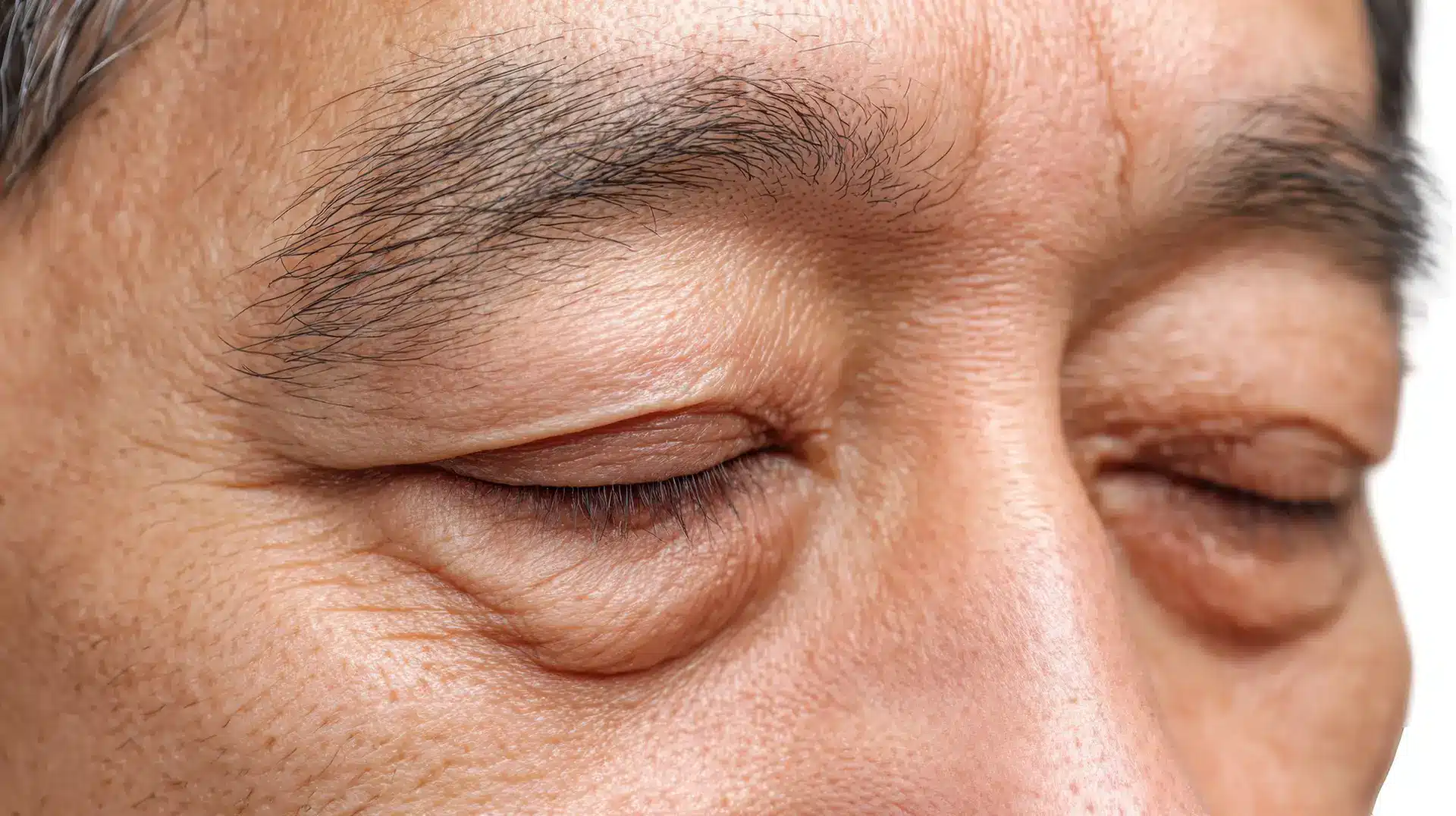
Ptosis refers to the abnormal drooping of the upper eyelid, which can occur in one or both eyes. This condition is medically known as blepharoptosis, and it happens when the muscles responsible for lifting the eyelid (primarily the levator palpebrae superioris) weaken or stretch.
It can affect one eye (unilateral ptosis) or both eyes (bilateral ptosis), and its severity can range from barely noticeable to completely obstructive.
While some may live with mild drooping for years without issue, others experience eye strain, blocked vision, or even headaches from constantly using their forehead muscles to lift their lids. This is why so many seek ptosis surgery.
In children, untreated ptosis can lead to amblyopia (lazy eye) or strabismus (misaligned eyes), both of which can permanently affect visual development.
Causes of Ptosis
Only a doctor can determine if surgery is right for you, and that decision depends on the exact cause of your ptosis. Still, it helps to know the most common causes before your consultation.
- Congenital Ptosis: If you or your child were born with ptosis, the levator muscle likely didn’t develop fully. This type of ptosis often requires early intervention to prevent vision problems like amblyopia (lazy eye) or astigmatism.
- Involutional (Age-related) Ptosis: As you age, the levator muscle stretches or separates from the eyelid’s internal structures. This is the most common form of ptosis in adults and can be gradual or accelerated by factors like chronic contact lens wear.
- Neurogenic Ptosis: Nerve damage or dysfunction can prevent your eyelid from lifting properly. Conditions like third cranial nerve palsy, Horner’s syndrome, or myasthenia gravis can all lead to this type of ptosis.
- Myogenic Ptosis: Diseases that affect muscle strength, such as muscular dystrophy or chronic progressive external ophthalmoplegia, can weaken your eyelid muscles directly.
- Mechanical Ptosis: When something physically weighs down the lid, such as a tumour, cyst, inflammation, or excessive eyelid skin (dermatochalasis).
- Traumatic Ptosis: If you’ve had an injury or previous eye surgery, it may have disrupted the muscle or tendon that controls your eyelid.
Symptoms of Ptosis
The signs of ptosis can be subtle at first, but you’ll likely notice:
- One or both eyelids drooping, especially when tired.
- A sensation of heaviness or strain in your upper eyelids.
- Reduced upper vision, sometimes forcing you to tilt your head back to see.
- Excess forehead wrinkles from constantly raising your eyebrows to compensate.
- Eye fatigue or discomfort, especially during reading or computer work.
- Watery or dry eyes, depending on how the drooping lid affects blinking and tear film.
If you’re a parent, you might notice your child frequently tilting their head, squinting, or avoiding reading — all signs that ptosis may be interfering with vision development.
If any of these symptoms sound familiar, ptosis surgery in Singapore may help restore comfort and clarity. Schedule your consultation to see if it’s the right treatment for you.
Types of Ptosis Correction
Ptosis Surgery
In Singapore, ptosis surgery is the primary treatment for correcting droopy eyelids caused by weakened or stretched muscles. It directly addresses the levator muscle or creates an alternative lifting mechanism, depending on how well your natural muscle functions.
Who It’s For:
- Moderate to severe drooping that affects your vision.
- Muscle dysfunction due to ageing, congenital conditions, or trauma.
- Significant asymmetry or fatigue from constantly raising your brows.
Your surgeon will assess your levator muscle strength and recommend one of three main techniques:
1. Levator Advancement or Resection
Recommended For:
Age-related or acquired ptosis where the levator muscle is still functional but has weakened or detached.
How It Works:
Your surgeon shortens or reattaches the levator muscle to restore eyelid elevation.
What to Expect:
- Pre-surgery:
You’ll undergo eyelid measurements, levator function testing, and possibly a visual field test. Your doctor will explain the expected height and symmetry and advise you to pause certain medications. - During Surgery:
Surgery is performed under local anaesthesia, and takes a little over an hour. Your surgeon makes a small incision along your eyelid crease, tightens or repositions the levator muscle, and closes the site with fine sutures. - Post-Surgery:
Expect mild bruising and swelling for seven to 10 days. Use prescribed eye drops and ointments, avoid rubbing your eyes, and return for follow-up to monitor healing. Final results stabilise in two to three months.
2. Frontalis Sling Surgery
Recommended For:
Patients with severely weak or non-functioning levator muscles, often seen in congenital ptosis or neuromuscular disorders.
How It Works:
A sling made from your own tissue or a synthetic material connects your eyelid to your frontalis (forehead) muscle. You’ll lift your eyelid by raising your eyebrows.
What to Expect:
- Pre-Surgery:
Your surgeon will assess muscle function, review sling material options, and determine if one or both eyes require surgery. - During Surgery:
Usually done under general anaesthesia, especially for children. Your surgeon inserts the sling and adjusts eyelid height by observing brow movement. - Post-Surgery:
Recovery includes swelling, slight forehead stiffness, and temporary asymmetry that improves with healing. You’ll avoid rubbing your eyes and follow up to check eyelid mobility and comfort.
3. Müller’s Muscle-Conjunctival Resection (MMCR)
Recommended For:
Mild ptosis cases with good levator function and a positive response to phenylephrine eye drops, meaning your eyelid lifts temporarily with medication.
How It Works:
Your surgeon removes a small portion of the Müller’s muscle and conjunctiva from inside your eyelid to lift it slightly. No external incision is needed.
What to Expect:
- Pre-Surgery:
Your surgeon will conduct the phenylephrine test to see if you’re a candidate. You’ll review any medications to pause before surgery. - During Surgery:
Done under local anaesthesia. The internal incision means no visible scar, and the procedure is generally quicker — about 30 to 45 minutes. - Post-Surgery:
You’ll likely experience minimal downtime, with some swelling or mild discomfort for a few days. Most patients return to work within a week. Results typically stabilise in about a month.
Schedule an assessment with us to determine if you will benefit from ptosis surgery in Singapore.
Double Eyelid Surgery
Double eyelid surgery creates or enhances the upper eyelid crease. When combined with ptosis surgery, it improves both the appearance and function of your eyes.
Who It’s for:
If you have a monolid or low crease and want a more defined, symmetrical eye shape.
How it Works:
The procedure defines the eyelid crease by adjusting the skin, muscle, and fat layers. When paired with ptosis surgery, your surgeon uses the same incision to reposition the eyelid and create the crease in one session.
What to Expect:
- Pre-Surgery:
You’ll discuss the desired crease height and shape, review your anatomy (fat pads, skin thickness, brow position), and plan whether to remove excess skin or fat. - During Surgery:
Usually performed under local anaesthesia with sedation. The surgeon designs the new crease, corrects ptosis through the same incision, and closes with fine sutures. - Post-Surgery:
Expect swelling and bruising for about two weeks. You’ll use prescribed drops, avoid eye makeup and contact lenses for about three weeks, and follow up to monitor symmetry and crease definition. Full results typically appear in three months.
Non-Surgical Ptosis Solutions
Non-surgical options offer temporary improvement for mild ptosis. They’re ideal if you’re not ready for ptosis surgery or if your eyelid droop is minimal and doesn’t affect your vision.
Recommended For:
You may consider these options if you:
- Have only slight eyelid sagging.
- Want a temporary fix for events or short-term improvement.
- Can’t undergo surgery for medical reasons.
Types of Non-Surgical Solutions:
- Prescription Eye Drops (Oxymetazoline 0.1%) : Prescription-only drops that stimulate Müller’s muscle and raise the lid by 1-2 mm. Effects last for several hours.
- Ptosis Crutches: Small attachments on your glasses that hold up the eyelid.
Why Choose Dr. Woffles Wu For Ptosis Surgery
Ptosis surgery is most effective when tailored to your specific condition. At our clinic, Dr. Woffles Wu carefully assesses your eyelid function, explains the available techniques, and recommends the approach most suited to your needs.
From consultation to follow-up, you’ll have clear guidance on what to expect at each stage. Book a consultation today to get started.