
TL;DR
- Non-surgical face-lifts lift and tighten skin without long downtime.
- Popular procedures include thread lifts, fillers, HIFU, and Ultherapy.
- These treatments are Ideal for mild to moderate sagging.
Surgical face-lifts used to be the only answer to sagging skin. That’s no longer the case. In Singapore, non-surgical face-lifting techniques now offer a practical middle ground — less risk, less downtime, and just enough lift to make a visible difference.
What are your options if you want to lift your face without surgery? How long do the results last? And how do you know if you’re a good candidate? Read on to find out.
What Is a Face-Lift?
In Singapore, a face-lift typically refers to procedures that reduce visible signs of ageing on the face and neck, such as sagging skin, deep lines, and loss of volume.
Traditionally, this has meant surgery — cutting, lifting, and tightening tissue. But in recent years, non-surgical options have emerged that aim to achieve similar results without going under the knife.
Types of Non-Surgical Face-Lift Procedures
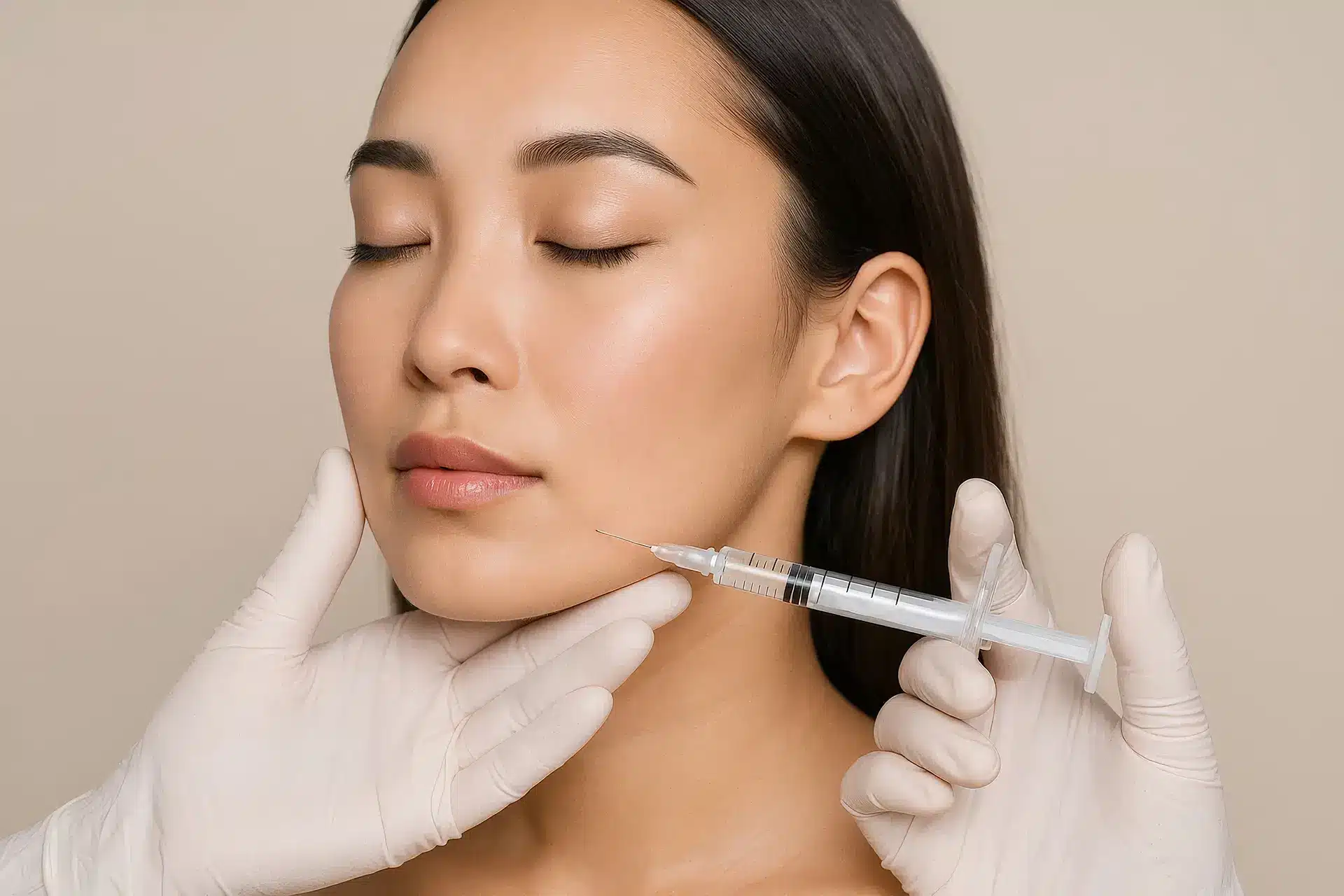
Non-surgical face-lifts in Singapore combine different technologies and injectable treatments to address skin laxity, volume loss, and dynamic wrinkles.
These procedures don’t replicate the full effects of surgery, but they can improve skin texture, reduce wrinkles, and restore facial contours with less risk and downtime.
Thread Lifts
Thread lifts are just one of the many non-surgical face-lift procedures available in Singapore. They involve placing dissolvable, medical-grade sutures just beneath the skin to lift sagging tissue, most commonly in the cheeks, jowls, brow, and neck. The threads, usually made from polydioxanone (PDO), poly-L-lactic acid (PLLA), or polycaprolactone (PCL), create a scaffolding effect and trigger collagen production in the treated area.
You may notice a lift after the procedure, but full results typically develop over two to three months as collagen builds, and can last between one and two years, depending on the type of thread used and the individual’s skin condition.
Thread lifts are suited for people with mild to moderate sagging. As with any medical procedure, there are risks involved: bruising, puckering, thread visibility, or asymmetry, though these are usually temporary and correctable.
Dermal Fillers
Dermal fillers restore facial volume lost due to ageing, weight loss, or bone resorption. The most common type, hyaluronic acid (HA) fillers, are used to plump the cheeks, fill hollow temples, and smooth nasolabial folds or under-eye areas. Others, like calcium hydroxylapatite or poly-L-lactic acid, provide deeper structural support and stimulate collagen.
While fillers don’t lift tissue in the traditional sense, they restore youthful contours and reduce shadows that contribute to a “tired” appearance. The effect of this type of face-lift is often immediate and can last from six months to two years, depending on the filler type and area treated.
When done correctly, fillers enhance without over-volumising. Complications, though rare, can include bruising, lumps and in very rare cases, vascular occlusion if not injected properly.
Neuromodulator Injections
Neuromodulator injections relax targeted muscles and are typically used on the forehead, between the brows, and around the eyes to soften dynamic wrinkles caused by facial movement.
While these injections don’t lift sagging skin, they can complement face-lifting procedures by evening out expression lines and creating a more refreshed look.
Results appear within three to five days and typically last three to four months. Neuromodulator injections have minimal downtime, although side effects such as drooping eyelids or asymmetry can occasionally occur if injected incorrectly.
Ultherapy
Ultherapy is another non-surgical face-lift in Singapore, which uses micro-focused ultrasound to deliver energy into the deeper layers of the skin, specifically targeting the superficial musculoaponeurotic system (SMAS) — the same foundational tissue layer adjusted during surgical face-lifts.
It stimulates collagen and elastin production over time, helping to firm and lift areas like the brow, jawline, and neck. Because it uses real-time ultrasound imaging, practitioners can visualise tissue depth and target treatment more precisely, improving safety and outcomes.
Unlike injectables, Ultherapy has a delayed effect: results develop gradually over two to three months and can last up to a year or more. It’s best suited for those with mild to moderate laxity who want a gradual improvement without downtime. Some patients may experience temporary redness, swelling, or tingling after treatment.
High-Intensity Focused Ultrasound (HIFU)
HIFU is similar in principle to Ultherapy, but doesn’t always come with built-in imaging. It uses high-frequency ultrasound to deliver heat energy into the deeper dermis and SMAS layer, prompting collagen remodelling and a tightening effect.
This non-surgical type of face-lift can be used on the face and neck to reduce sagging, improve jawline definition, and lift the cheeks. It’s a non-invasive option with no needles or incisions, and most people resume daily activities immediately after the session.
Unlike laser treatments, HIFU doesn’t damage the skin’s surface. Results unfold over eight to 12 weeks and may last up to a year. However, comfort levels vary. Some find it mildly uncomfortable, while others need numbing cream or oral pain relief.
Laser Skin Resurfacing
Laser skin resurfacing uses concentrated beams of light to remove outer layers of damaged skin, revealing a more even-toned skin underneath. It also stimulates collagen production in deeper layers, helping improve firmness and elasticity over time.
There are two main types:
- Ablative lasers (e.g. CO₂, Er:YAG) remove skin layers and require longer recovery but offer more dramatic improvement.
- Non-ablative lasers (e.g. Fraxel) heat tissue without removing it, offering a gentler option with minimal downtime.
While laser resurfacing is not a lifting treatment per se, it complements face-lift procedures in Singapore by refining skin texture, minimising pores, and reducing sun damage or fine lines. To minimise the risk of hyperpigmentation, particularly in medium to deep skin tones, it’s essential to conduct thorough pre-treatment screenings and ensure proper sun protection afterward.
Not sure which treatment suits your skin best? Start with a consultation to map out the right non-surgical face-lifting approach based on your goals and skin condition. Contact Dr Woffles Wu to book a slot.
How Non-Surgical Face-Lifts Compare to Surgical Options
| Factor | Non-Surgical Face-Lift | Surgical Face-Lift |
| Invasiveness | No incisions; minimal downtime | Involves anaesthesia and cutting |
| Results | Subtle to moderate lifting and tightening | More dramatic, structural repositioning |
| Duration | Six months to two years (depending on treatment) | Seven to 10+ years |
| Downtime | None to a few days | Recovery time of two to four weeks |
| Scarring | None | Minimal, usually hidden around the ears or hairline |
| Cost | Lower per session, but accumulates over time | Higher upfront cost, fewer sessions needed |
| Suitability | Early signs of ageing | Significant sagging, skin excess |
Benefits of Face-Lifting
Face-lifting can help you:
- Soften fine lines and wrinkles.
- Restore facial volume lost with age.
- Improve skin texture and tone.
- Lift sagging skin in areas like the cheeks and jawline.
- Enhance facial contours subtly, without altering your expression.
Who Should Consider Non-Surgical Face-Lifting
You might be a good candidate for a non-surgical face-lift procedure if you:
- Have mild to moderate skin laxity.
- Are noticing volume loss or early signs of ageing.
- Prefer gradual, subtle improvements.
- Want to avoid or postpone surgery.
- Have health concerns that make surgery risky.
These treatments may not replace a surgical face-lift if you have significant skin sagging or deeply etched lines, but they can be effective for maintenance or early intervention.
Get a professional assessment to determine if non-surgical face-lifting suits your skin type and ageing pattern. Contact us here to get started.
How to Maintain Results After a Non-Surgical Face-Lift
How long results last depends on your skin type, age, and the procedure used, but post-treatment habits play a big role, too. Here’s what you can do:
- Follow your provider’s aftercare instructions. This includes avoiding heavy exercise, saunas, or alcohol for 24 to 48 hours after procedures like fillers or thread lifts.
- Use daily sun protection. UV exposure breaks down collagen and accelerates skin ageing. A broad-spectrum sunscreen is essential even on cloudy days.
- Stick to evidence-based skincare. Products containing retinoids, peptides, and antioxidants can support skin texture and collagen production.
- Avoid smoking and high-sugar diets. Both are linked to skin glycation and volume loss, which can undo your facelift gains.
- Schedule maintenance treatments. Neuromodulator injections typically need refreshing every three to four months; fillers may last six to 18 months. Devices like HIFU or Ultherapy might be repeated yearly, depending on your goals.
Ultimately, consistency matters more than dramatic overhauls. A well-maintained skin routine and periodic touch-ups will likely keep your face-lift results stable and natural-looking.
Why Choose Dr. Woffles Wu For Face-Lifting in Singapore
Dr Woffles Wu combines surgical training with a deep understanding of facial ageing, offering patients options that are both medically sound and aesthetically refined. Every face is different, and so is every plan he creates.
To explore the most suitable options for your face and goals, book a consultation with Dr Wu.